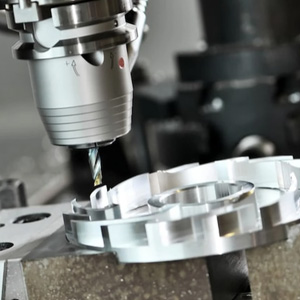
Machining is a precision manufacturing process in which material is removed from a workpiece to achieve the desired shape, size, and surface finish. It is performed using cutting tools and machines such as lathes, milling machines, drilling machines, and CNC (Computer Numerical Control) systems.
Casting is ideal for producing complex shapes, large parts, or components that would be difficult or expensive to machine. It is widely used for both ferrous (iron-based) and non-ferrous (aluminum, bronze, brass, etc.) materials.
Materials: stainless steel, low and high carbon steel, aluminum, brass, copper, exotic material, hastelloy to ASTM, ISO, DIN, JIS and MIL standards. Surface treatment: Heat treatment, plating of nickel, chrome, silver, plasma coating, ED coating, polyester and epoxy coating, lead-free painting, conductive painting, etc.
| Materials | |||||
|---|---|---|---|---|---|
| Stainless Steel | Low and High Carbon Steel | Aluminium | Brass | Exotic Materials | Hastelloy |
| SS300, SS400, Duplex steel, 17-4 PH, 15-5 PH | EN series, 9, 18, 19, 20, 24, 36, AISI1005, 1006, 1008, 1009, 1055, 1059, 1060, 1080 | ASTM6061, 6063, 7072, 7075, 7076, HE30 | C6801, 6802, c69300, 23000, lead free brass | Inconel(IN 600, 625, 718, 825, 800) Monel(400, K500) Titanium(Grade 1, 2, 5, 12, Ti6Al4V, Ti6Al4V Eli) Tungsten carbide(DK105, DK120, DK255 F, DK400 N, DK405, DK460UF, DK470Uf, DK500UF) | B-2, C-4, C-22, C-276, G-30 and H |
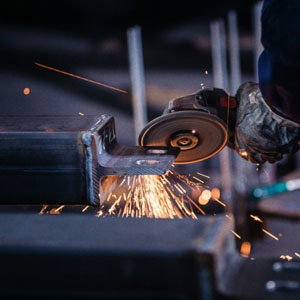
Fabrication is the process of building metal structures and components through cutting, bending, welding, and assembling techniques. Using advanced machinery and skilled craftsmanship, raw materials such as steel, aluminum, and stainless steel are transformed into finished products and assemblies. Precision fabrication ensures strength, durability, and accuracy in every part, making it essential for industries like construction, automotive, energy, and manufacturing.